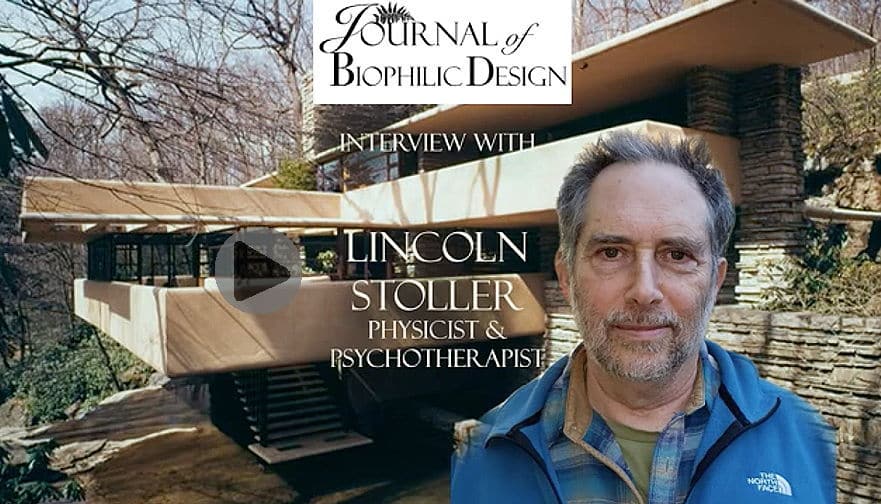
Frank Lloyd Wright, Photography, Biophilia and Awe (podcast)
When we stop looking at a building simply as a building we experience something beyond the immediately visible.

When we stop looking at a building simply as a building we experience something beyond the immediately visible.
Neurosensory integration is your ability to sense, understand and organize information from your body and environment
Dreams are a thought-style we have yet to recognize. They’re a part of our thinking process in which we have not yet learned to play a conscious role.
It may be possible to appreciate your limitations if you really try. If you don’t, you won’t get past them.
There is a crazy person inside you. They need rescue not execution. But they will not be rescued until you give them permission to find their own peace.
Real life disappoints; we want a second chance. Beyond play, family games are communal, collaborative, cathartic, and suggestive.
Moods are more subtle than emotions and easier to control. Despite of their differences, if you move one, you’ll move the other.
It drives me crazy that no one correctly defines conscious, unconscious, and subconscious processes.
A far-reaching conversation about my book, Operating Manual for Enlightenment, that explores the creation of our personality through intellect, emotion, and neurology.
The first thing to look for when purchasing therapy, as in buying a used car, is knowing what you’re looking for.
Psychotherapy recognizes three foundational areas: conscious intention, subconscious feelings, and habitual behaviors. Creativity is different, and it is overlooked.
Fear is a pervasive warning that diverts our attention from small matters of maintenance. Somewhat ironically, it can lead us into danger.